
Designing Family Homes That Truly Work
Designing a home for families with school-age kids is about more than good looks. It is about understanding real routines, daily pressure points, and how a home supports calm, connection, and function. This blog explores how thoughtful design of mud rooms, kitchens, bedrooms, and laundries can reduce stress and create homes that truly work for family life.It All Begins Here
(Especially With School‑Age Kids)
At Forme Studio, we believe great design isn’t about trends or picture‑perfect finishes. It’s about designing homes around real people, real routines, and real life.
When a family has school‑age kids, the home needs to support busy mornings, emotional decompression after school, sport gear explosions, homework zones, and the constant rhythm of washing, packing, feeding, and resetting.
A well‑designed home doesn’t fight this reality , it quietly supports it.
This is where human‑first, functional design makes all the difference.
Start With the People, Not the Floor Plan
Before we talk about rooms, we start with the occupants. Their ages. Their energy levels. Their routines. Their pressure points.
School‑age children bring very specific patterns into a home: - Morning time pressure - After‑school drop zones - The need for both connection and separation - High laundry loads and storage demands
When these realities are acknowledged early, the design naturally becomes calmer, more functional, and easier to live in.
Mud Rooms: Creating a Calm Transition Zone
The mud room is one of the most underestimated spaces in a family home. Done well, it becomes a pressure‑release valve between the outside world and the living spaces.
Rather than treating it as leftover space, we design mud rooms intentionally , around flow, storage, and independence.
Key considerations: - Clear zones for bags, shoes, hats, and sports gear - Individual storage for each child to reduce clutter and conflict - Durable, easy‑clean finishes that can handle real use - Bench seating to support independence - Close proximity to the laundry where possible
A functional mud room doesn’t just keep the house tidy , it lowers stress before anyone even enters the home.
Kitchens:
The Emotional and Functional Hub
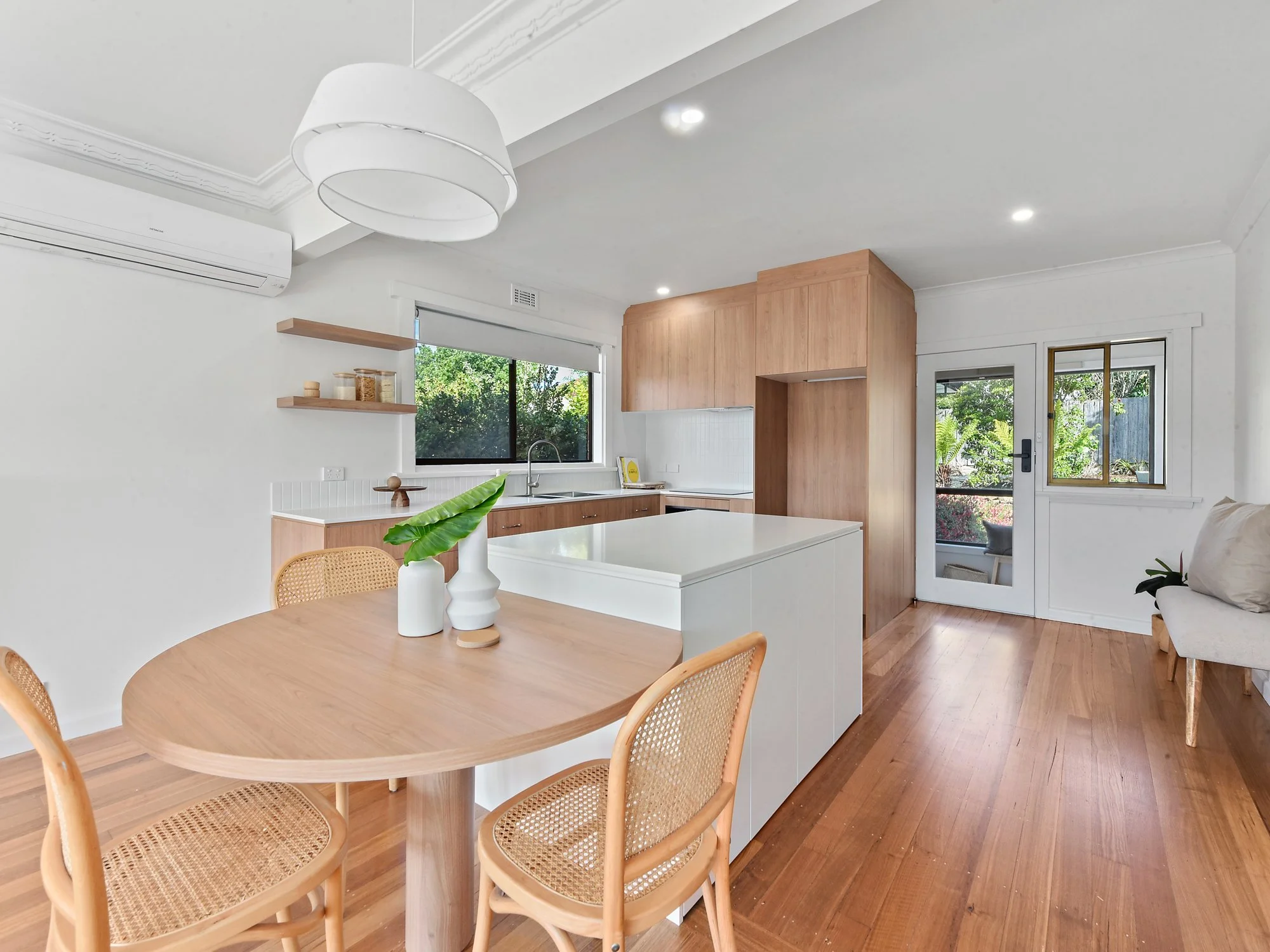
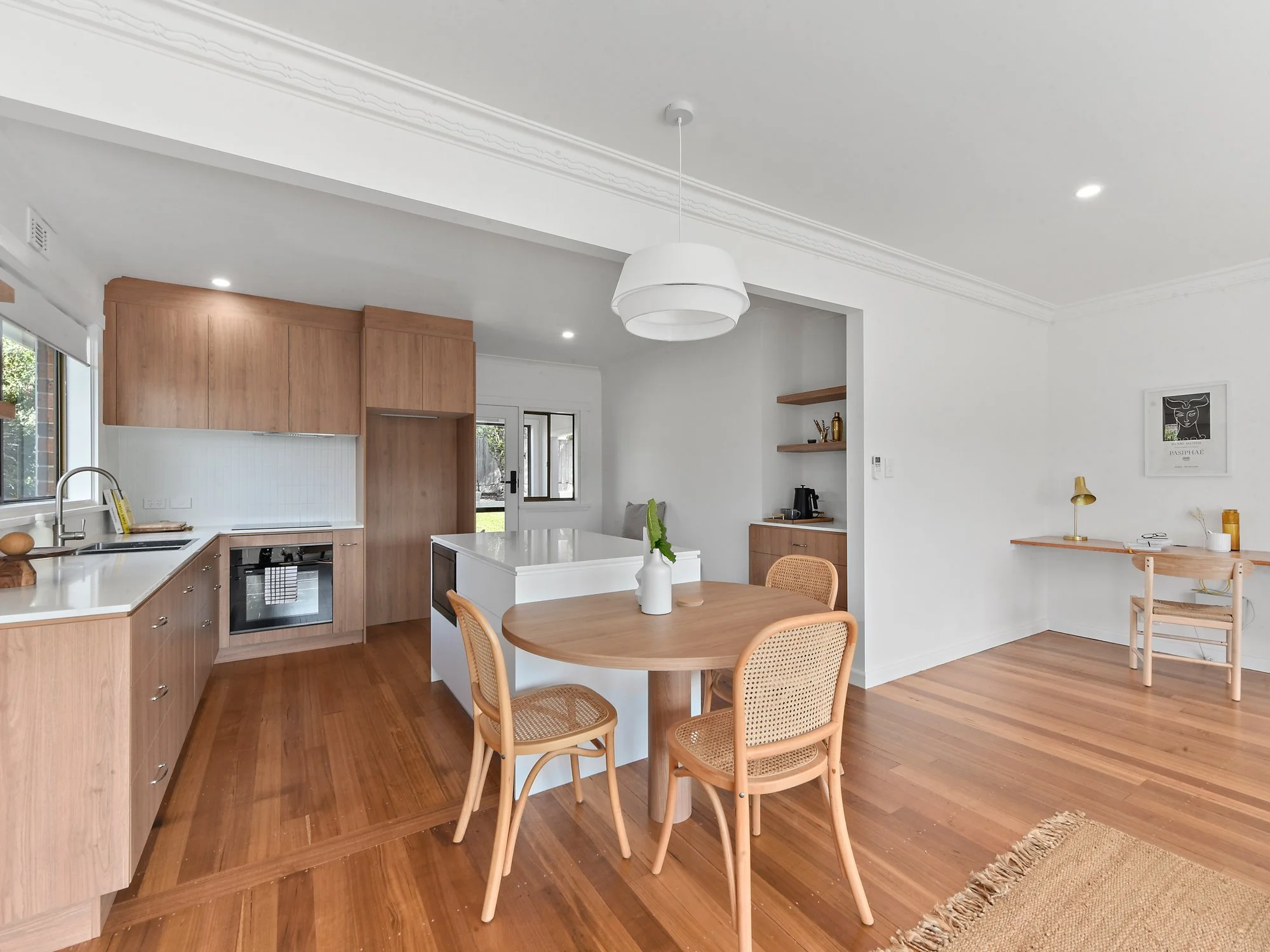
In family homes, the kitchen is rarely just about cooking. It’s a command centre, a homework station, a conversation hub, and often the place where everyone lands at once.
Designing a family kitchen means prioritising flow and function before finishes.
What matters most: - Generous, usable bench space for lunch prep, baking, and projects - Storage that children can access independently for snacks and school items - Sightlines that allow supervision without hovering - Materials that are forgiving, durable, and low‑stress - Pantry layouts that support daily routines, not just aesthetics
When a kitchen truly works, it naturally feels good , and looks good , without trying too hard.
Bedrooms: Supporting Growth, Rest, and Independence
Children’s bedrooms should evolve with them. A well‑designed bedroom supports sleep, study, storage, and emotional regulation , not just furniture placement.
Design principles we prioritise: - Built‑in storage to reduce visual clutter - Dedicated study zones that encourage focus - Flexible layouts that adapt as children grow - Thoughtful placement away from high‑noise areas
Bedrooms should feel like safe, calm retreats , especially for kids who are navigating busy school days and full schedules.
Laundries: Designed for the Reality of Family Life
Laundry is not an afterthought in a family home , it’s a high‑use workspace.
When designed properly, laundries reduce mental load and time pressure.
Functional features include: - Large folding benches - Hanging rails for uniforms and sportswear - Clear systems for sorting by child or day - Direct access to outdoors where possible
A calm, organised laundry supports the entire household rhythm.
Function Before Finish, Always
At Forme Studio, we design homes that are functional, healthy, and emotionally supportive , because when a home truly works, it naturally feels beautiful.
By placing people before plans and function before finishes, family homes become easier to live in, more resilient over time, and better suited to the lives unfolding inside them.
Good design doesn’t add complexity. It removes friction.
And for families with school‑age kids, that matters more than anything.